Cherry blossoms are often associated with a few famous scenes in Tokyo and Kyoto, but planning a trip around sakura becomes much more interesting once you look at Japan as a whole. The country stretches for more than 3,000 kilometres from southwest to northeast, and spring does not arrive everywhere at the same time. Cherry blossoms can appear in the warmer parts of Japan while northern regions are still covered in snow, then gradually move north until Hokkaido reaches its season weeks later. For international visitors, this means that missing the blossoms in Tokyo does not necessarily mean missing cherry blossoms in Japan.
There is another reason to look beyond a simple list of famous viewing spots. Cherry blossoms are part of the landscape in very different ways depending on where you go. In Tokyo they appear among skyscrapers, rivers and neighbourhood parks. Around Mount Fuji, the attraction is the combination of blossoms, lakes and the mountain itself. Kyoto places sakura among temples and historic streets, while Yoshino covers entire mountain slopes in pale pink. In Hirosaki, thousands of blossoms surround a former castle and its moat. The best place therefore depends not only on flowering dates, but also on what kind of Japan you want to see during the short period when the trees are in bloom.
Sakura Season Starts Earlier Than You Think
For many visitors, cherry blossom season means late March and early April. That is approximately correct for Tokyo, Kyoto and much of central Japan, but it is not the beginning of the sakura season. In the Izu Peninsula southwest of Tokyo, Kawazu-zakura usually begins flowering much earlier. These blossoms have a deeper pink colour than the pale Somei Yoshino most commonly associated with Japanese spring, and their flowering period is relatively long. In Kawazu, rows of cherry trees follow the river through the town, creating one of the first major sakura landscapes of the year.
This makes February an overlooked period for travellers whose main purpose is seeing cherry blossoms. The atmosphere is different from the main season: the surrounding mountains are still in their winter colours and temperatures remain cool, yet the riverside can already be lined with pink. Kawazu also works particularly well as part of an Izu Peninsula itinerary rather than as a destination visited only to photograph the blossoms. Onsen towns, the rugged Pacific coastline and views of Mount Fuji from western Izu give the area enough depth for several days. A Japan trip built around flowers does not therefore have to begin with Tokyo in late March; it can begin several weeks earlier and follow spring northward.
Tokyo Shows Sakura as Part of Everyday Japan
Tokyo has some of Japan’s most famous cherry blossom locations, but what makes the city interesting during sakura season is not any single park. Cherry trees appear along rivers, beside railway lines, around schools, near temples and throughout residential neighbourhoods. For a short period, an enormous modern city changes character without stopping its normal daily life. This contrast is one of the reasons Tokyo deserves to be included even when a cherry blossom itinerary continues into rural Japan.
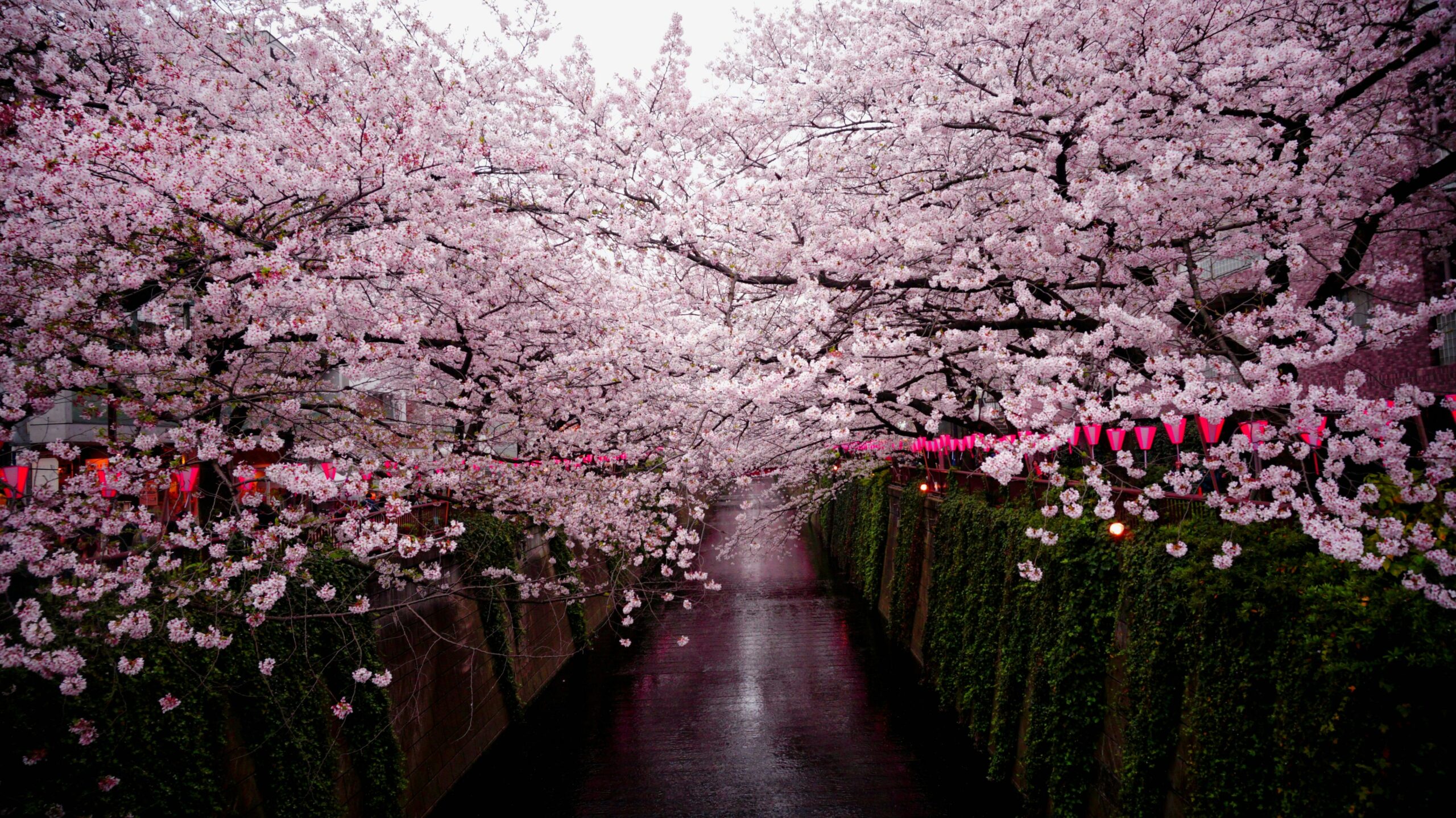
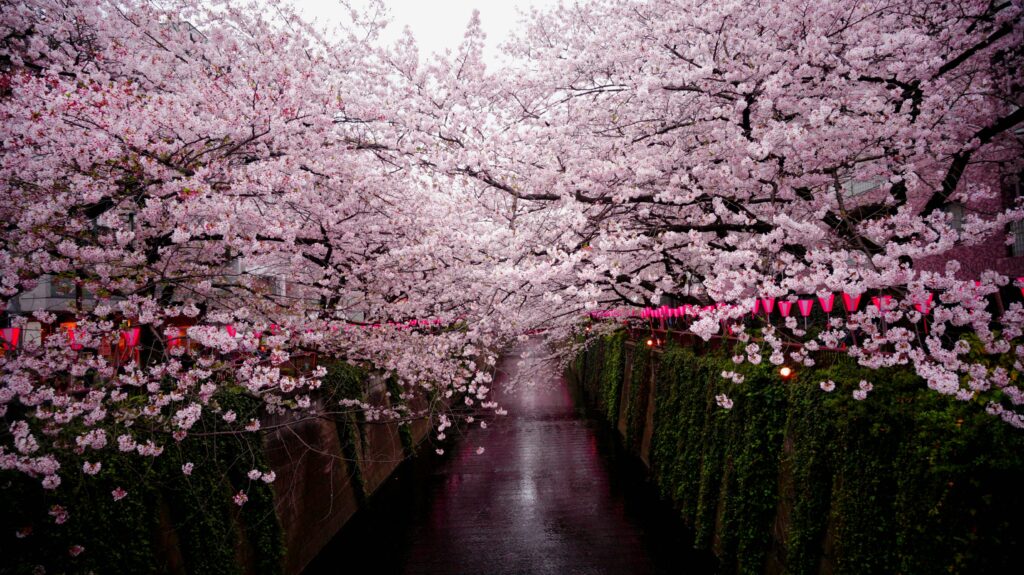
The Meguro River presents the urban version particularly well. Cherry trees line both sides of a relatively narrow river, their branches extending toward the water between apartments, shops and bridges. Chidorigafuchi offers a completely different setting, with blossoms following the former moat of the Imperial Palace and boats passing beneath overhanging branches. Ueno Park is larger and busier, showing another side of hanami culture, where people gather beneath the trees rather than simply viewing them from a distance. Instead of trying to visit every famous location, it is better to choose places with contrasting surroundings. A riverside walk in the morning and an illuminated area after sunset can show more of Tokyo’s sakura season than spending a day moving between parks merely because they appear on a list of recommended spots.
Mount Fuji Changes the Cherry Blossom Landscape
Mount Fuji is one of the few places where waiting a little longer can work in favour of a cherry blossom trip. The Fuji Five Lakes are at a higher elevation than Tokyo, so flowering generally occurs later. Travellers arriving after the main Tokyo season may therefore find that spring is still developing around the mountain. This difference in timing is useful when planning a route through Japan, particularly in years when warm weather brings the blossoms forward in the major cities.
The attraction here is not the number of cherry trees alone. Around Lake Kawaguchiko and the surrounding area, sakura becomes one element in a much larger landscape. Snow can remain on the upper slopes of Mount Fuji while cherry trees bloom below, creating a combination that exists for only a short period each year. Weather matters more here than in a city park because Fuji can disappear behind clouds even when the blossoms are at their best. Staying overnight gives more opportunities to see the mountain clearly, especially in the morning. This is a good example of why a flower-focused Japan itinerary should not be planned simply by collecting famous viewing locations. The relationship between flowering time, elevation, weather and the surrounding landscape determines what you will see.
Kyoto and Yoshino Offer Two Different Springs
Kyoto’s cherry blossoms cannot be separated from the architecture and history around them. The Philosopher’s Path follows a canal beneath rows of trees, while temples throughout the city have individual gardens, weeping cherries and evening illuminations. Maruyama Park is known for its large weeping cherry tree, and the Higashiyama area combines blossoms with narrow streets, temple roofs and the slopes of eastern Kyoto. The city deserves more than a hurried visit during spring because the experience changes according to the hour. A temple garden shortly after opening bears little resemblance to the same district in the middle of the afternoon.
Yoshino, in Nara Prefecture, offers something entirely different. Rather than concentrating cherry trees around a garden or river, Mount Yoshino has tens of thousands of trees spread across its slopes. The mountain is traditionally divided into lower, middle, upper and inner areas, and elevation creates slight differences in flowering time. As the season progresses, the colour appears to climb the mountain. This is one of Japan’s most distinctive sakura landscapes because the blossoms are not decoration around another attraction; they become the landscape itself. Kyoto and Yoshino can be combined within the same Kansai itinerary, but they should not be treated as interchangeable cherry blossom destinations. Kyoto is about sakura among temples and historic neighbourhoods, while Yoshino is about seeing spring spread across an entire mountain.
Northern Japan Extends Sakura into May
One of the most useful things to know when planning a cherry blossom trip is that the season does not end when petals fall in Tokyo or Kyoto. Spring continues north through Tohoku before eventually reaching Hokkaido. This gives travellers visiting Japan in the second half of April another opportunity, while also opening regions that receive fewer international visitors than the traditional Tokyo–Kyoto route.
Hirosaki in Aomori Prefecture is the standout destination in northern Honshu. Around 2,600 cherry trees grow in Hirosaki Park, surrounding the castle grounds, stone walls and moats. The setting becomes particularly distinctive after petals begin to fall. Rather than marking the end of the experience, fallen petals collect on the surface of the moat, sometimes covering large sections of the water in pink. This stage is known as hanaikada, or “flower raft,” and it means that Hirosaki can remain visually interesting even after full bloom has passed.
Farther north, Hokkaido brings the long Japanese cherry blossom season toward its conclusion. Hakodate’s Goryokaku is especially striking because the star-shaped former fort is surrounded by cherry trees. Seen from ground level, it is a large park filled with blossoms; viewed from the nearby tower, the geometry of the fort becomes part of the scene. Matsumae, farther west, offers another experience, with numerous varieties of cherry trees around a historic castle area and a flowering period that can extend beyond the brief peak associated with Somei Yoshino.
This northward progression changes the way a sakura trip can be planned. Someone visiting Japan in early April might combine Tokyo, Mount Fuji and Kyoto. Later in April, Tohoku becomes more relevant. Around the end of April and into early May, parts of Hokkaido come into season. Exact flowering dates change every year, so historical averages should be used only as a starting point rather than as fixed dates.
Follow Spring Instead of Chasing Full Bloom
The most memorable cherry blossom trips are not necessarily those that arrive everywhere on the exact day of full bloom. Sakura changes from the first flowers opening to full bloom and then to the stage when petals begin falling. Each period has its own scenery. A river covered with petals, a temple garden with blossoms beginning to scatter or a mountain where different elevations flower at slightly different times can be as characteristic of Japanese spring as a tree at its absolute peak.
For overseas visitors, the better approach is to build flexibility into the geography of the trip. Japan’s railway network makes it possible to move considerable distances during a single vacation, while the country’s differences in latitude and elevation create several opportunities to encounter cherry blossoms. Tokyo may be past peak while the Fuji area is approaching it; Kyoto may be finishing while northern Tohoku is still waiting for spring. The flowering front continues north until Hokkaido, giving Japan an unusually long national sakura season even though full bloom in any one location remains brief.
It is also worth spending at least one night in a smaller cherry blossom destination rather than treating every location as a daytime excursion. Early morning and evening reveal places without the rhythm of daytime sightseeing, and many of Japan’s best flower landscapes are closely connected with their surroundings. Yoshino is a mountain community, Kawazu is part of the Izu Peninsula, Hirosaki is a castle town, and Hakodate has far more to offer than Goryokaku. Staying longer allows the destination to remain part of the experience after the photographs have been taken.
Japan’s cherry blossoms are often described as something that must be caught at precisely the right moment. For an individual tree that may be true, but for a trip across the country the season is much broader. From the early pink blossoms of the Izu Peninsula to the late spring of Hokkaido, sakura moves through different climates, landscapes and regional cultures for months. The best places to see cherry blossoms in Japan are therefore not simply the places with the most trees. They are the places where the blossoms reveal something distinctive about the part of Japan in which they grow.